
Rewriting the Canon: Shahzia Sikander and Seema Kohli in Contrast
Recently, I had the opportunity to experience works by Seema Kohli and Shahzia Sikander in Palo Alto. Seeing these artists in proximity, even across different spaces, illuminated a striking divergence in how contemporary South Asian women artists engage with mythology, power, and authorship.
Both artists draw from inherited visual languages. But what they do with those inheritances could not be more different.
And that difference matters.
Seema Kohli: Myth as Living Cosmos
Standing before Seema Kohli’s monumental gold-ground canvases, one feels enveloped rather than confronted.
In the large Tree of Life composition, rendered in acrylic and ink with 24ct gold leaf, the feminine figure is not peripheral; she is structural. She roots the image. She multiplies through lineage and cosmic continuity. Gold is not an ornament; it is cosmology.
In another darker, celestial work, the female form expands into a field of symbols, script-like forms, and suspended orbs. The figure radiates outward, inhabiting myth fully. Kohli does not fracture mythology; she inhabits it and re-centers the feminine within it.
Kohli’s practice feels devotional, expansive, and affirming. She works from within the mythic archive, enlarging it rather than dismantling it.
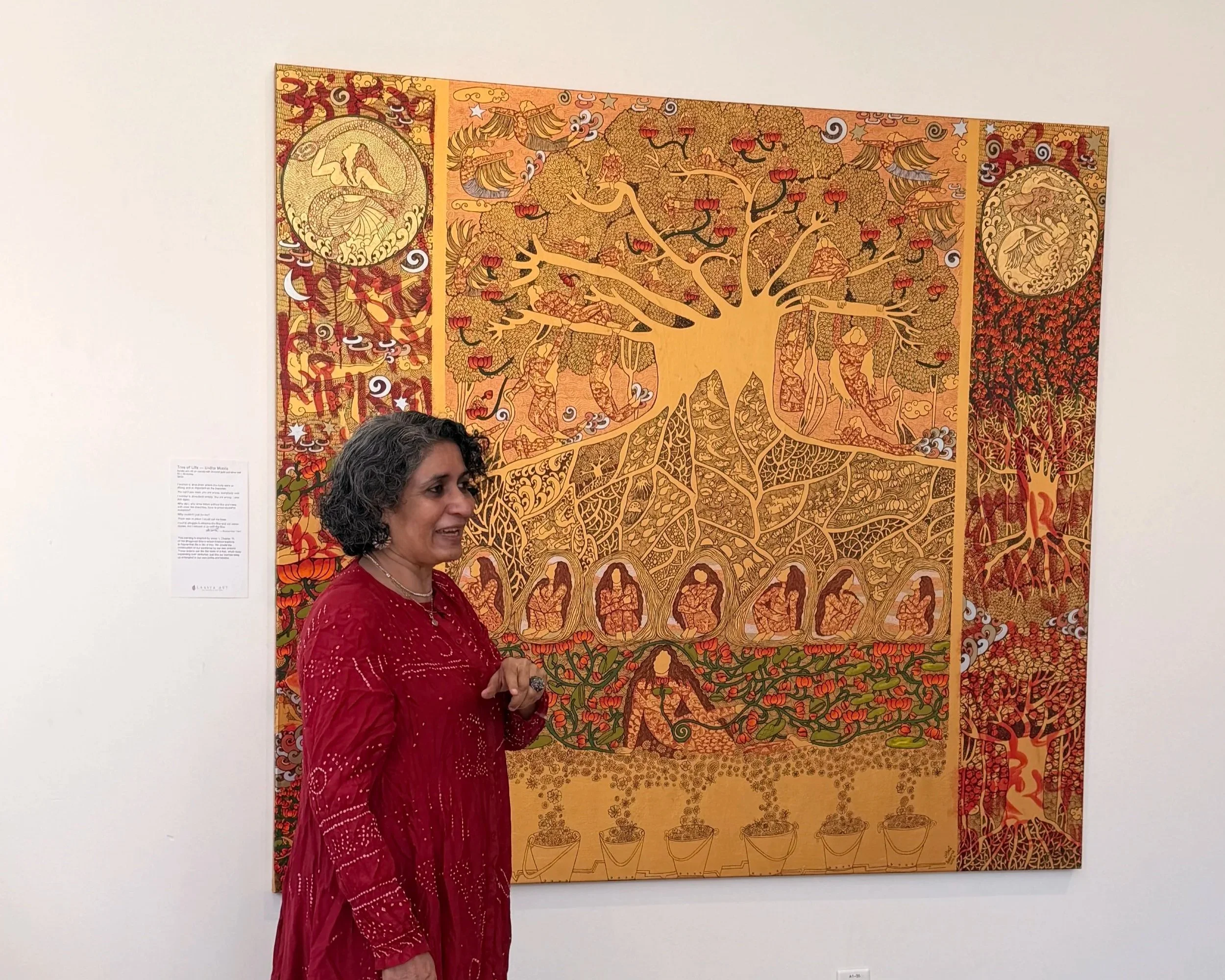
The artist in front of her “Tree of Life” painting
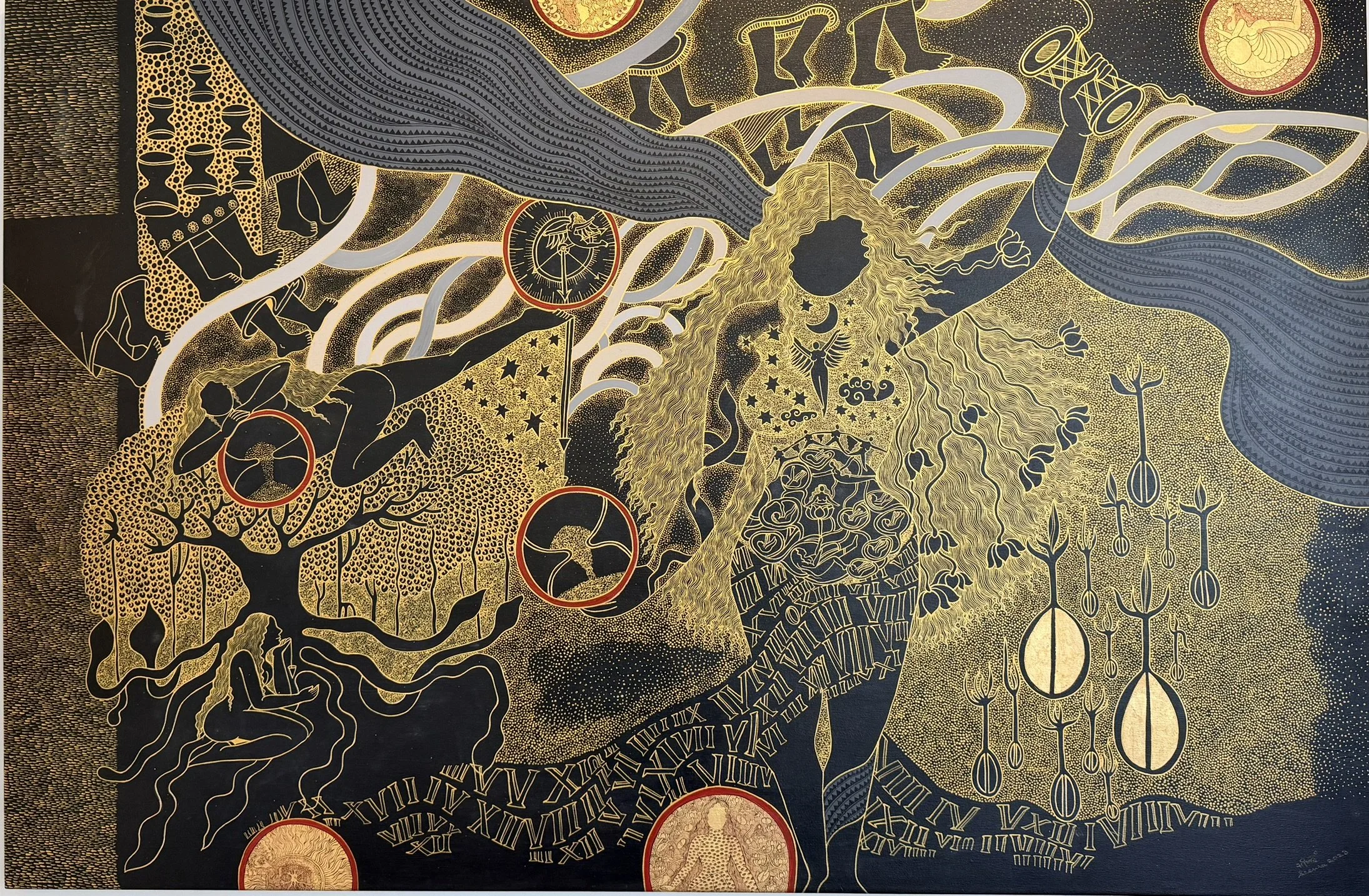
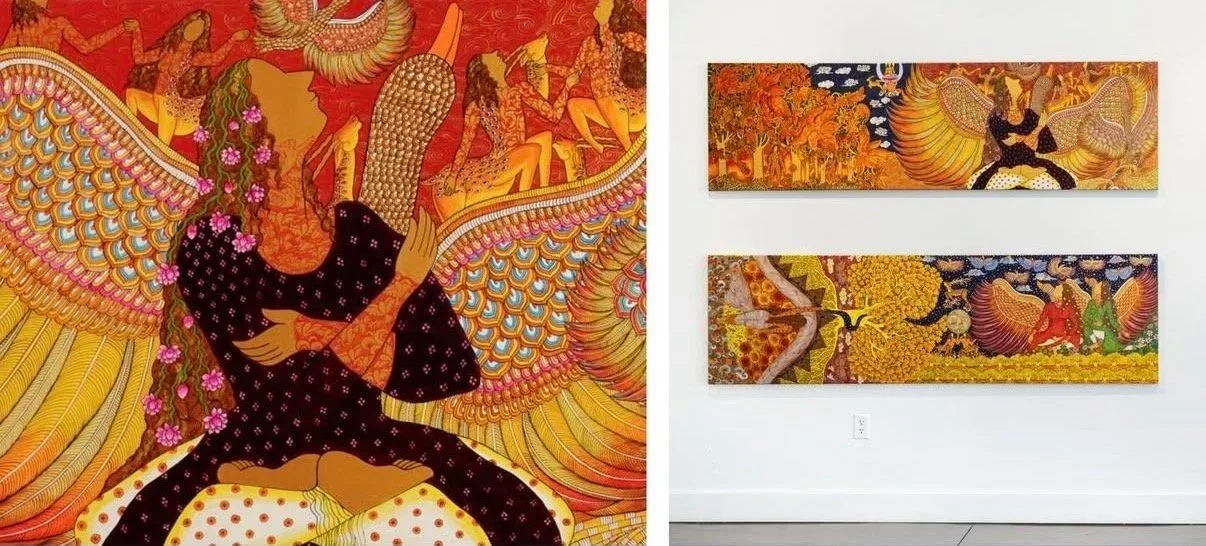
Art Exhibit in Palo Alto
Shahzia Sikander: Myth Disrupted
Where Kohli affirms, Sikander interrogates.
Sikander’s work repeatedly returns to roots — literal and metaphorical. Tendrils extend from bodies. Hair becomes filament. Figures dissolve into networks of line. What appears anchored is often in motion.
Sikander’s practice, spanning miniature painting, animation, large-scale installation, and public sculpture, reflects this conceptual fluidity. She moves across mediums the way she moves across histories.
Her global institutional positioning is significant, with major museum exhibitions and international recognition.
If Kohli works from within the mythic center, Sikander works along its edges — stretching, questioning, reconfiguring.
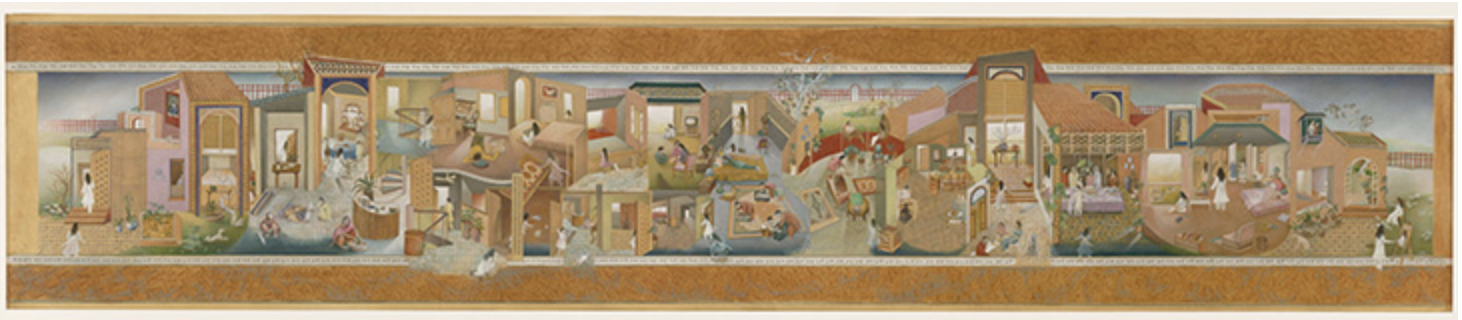
Shahzia Sikander, “The Scroll,” 1989–1990, vegetable color, dry pigment, watercolor, and tea on wasli paper
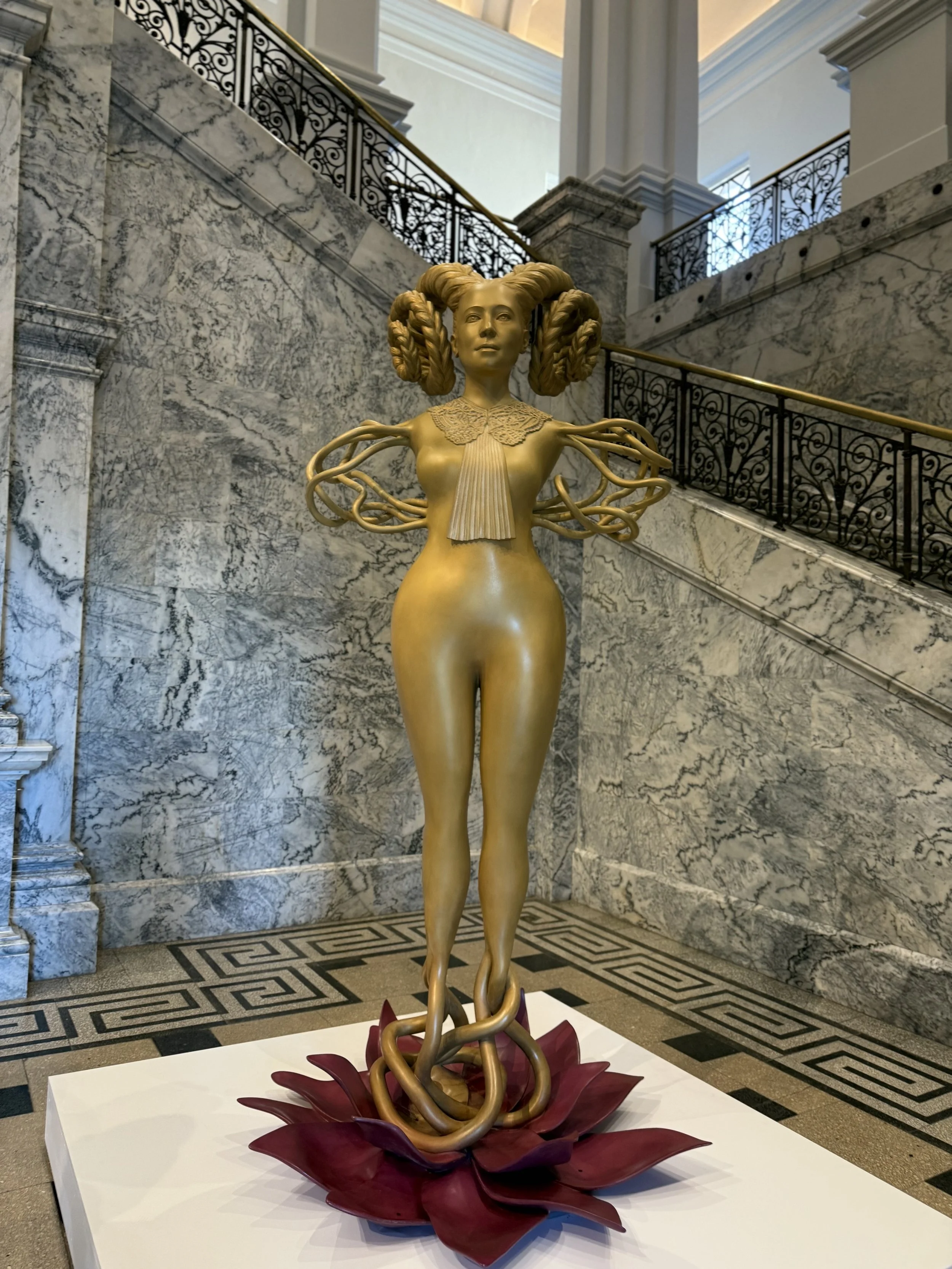
Shahzia Sikander, “NOW,” 2023, bronze, 8 feet high
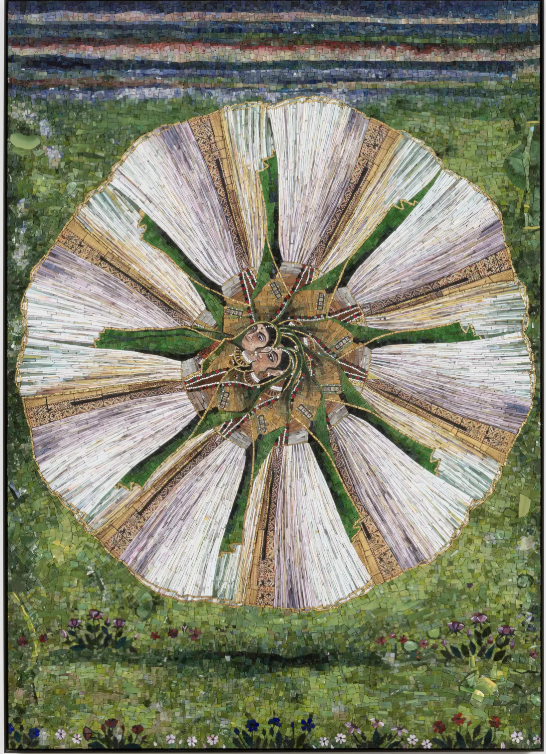
Shahzia Sikander, “Arose”, 2020. Glass mosaic with patinated brass frame
Global Visibility and the Politics of Reading
What is particularly compelling is how these artists are received.
Sikander is often framed within conversations about hybridity, diaspora, and institutional critique, narratives legible to Western institutions. Her work is positioned within global contemporary discourse.
Kohli’s work, grounded in mythic cosmology and sacred feminine energy, resists easy categorization within Western critical frameworks. It requires a different lens; one less conditioned to see devotion as decorative or mythology as regressive.
As curators and viewers, our responsibility is not only to elevate visibility but also to refine how we read.
Orb and Root: Two Responses to Inheritance
For someone whose own family history crosses Lahore and Delhi, continuity and rupture are not abstractions.
Kohli’s golden orb feels like continuity: lineage luminous and intact.
Sikander’s roots feel like negotiation: lineage entangled, examined, reconfigured.
One radiates from center.
The other questions the ground beneath it.
Both are deeply contemporary.
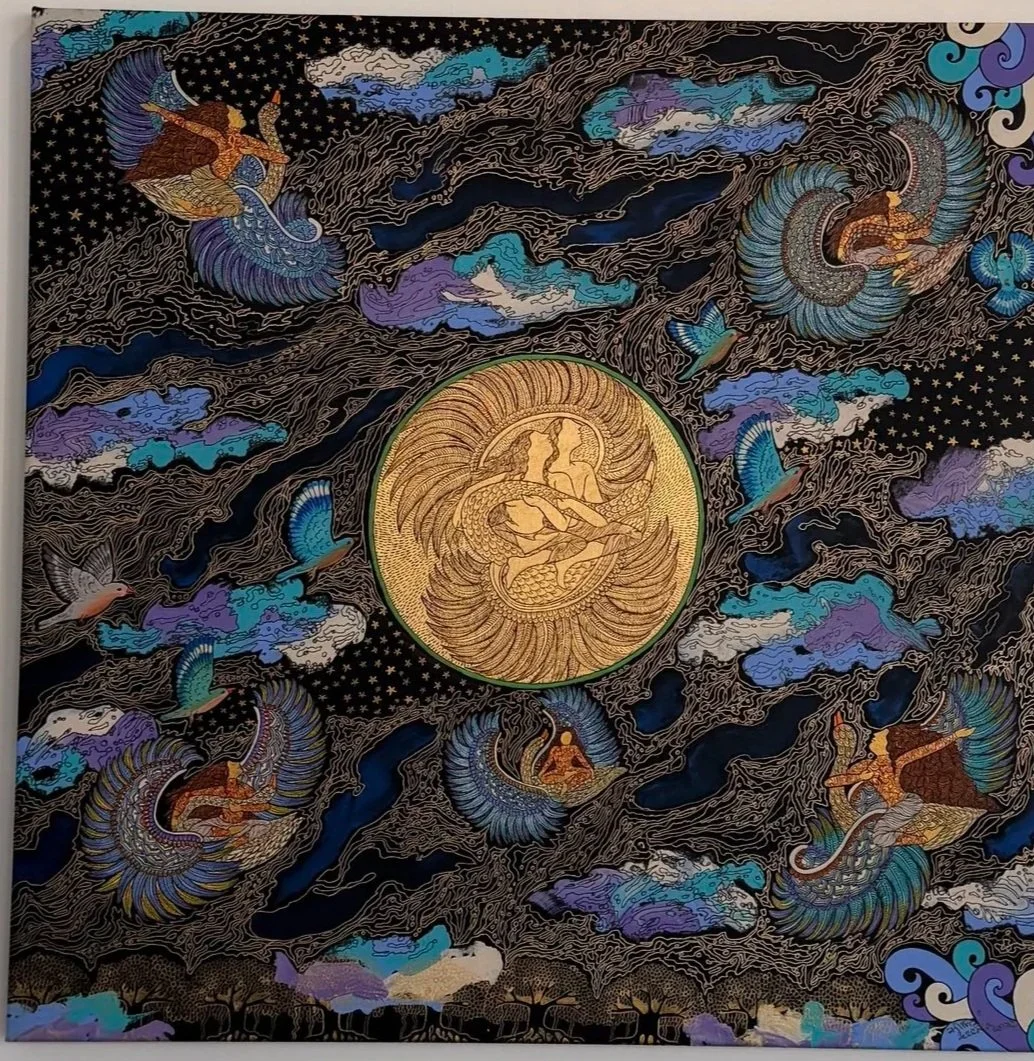
Untitled, Seema Kohli
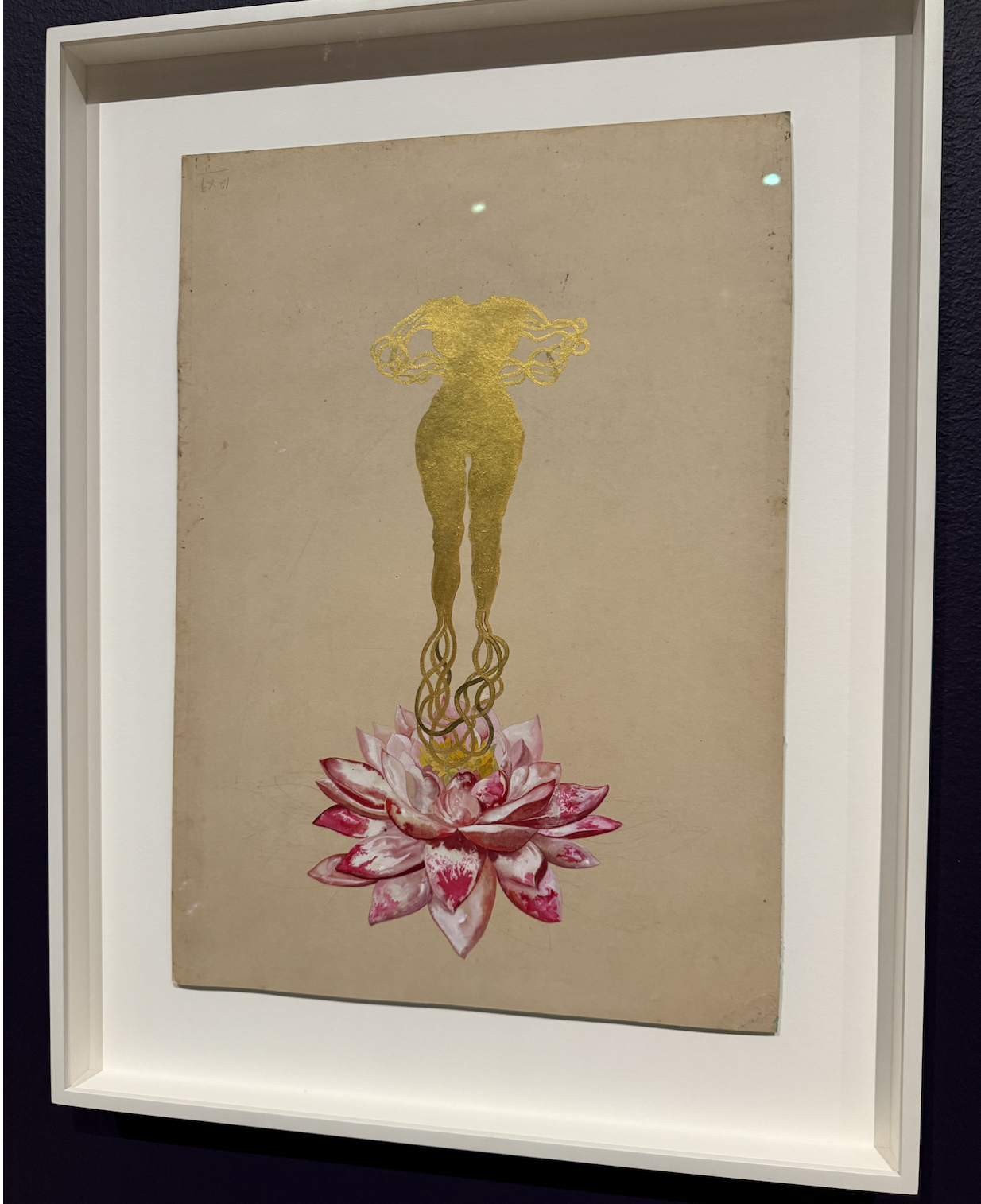
Shahzia Sikander
A Necessary Distinction
Contemporary South Asian female artists are not operating within a single narrative. They are reclaiming myth, rewriting it, fracturing it, illuminating it.
What we are witnessing is not representation — it is authorship.
And that distinction matters.