
Tradition, Disrupted: Shahzia Sikander & Seema Kohli
Two South Asian women artists. Two very different ways of looking at the stories we inherit.
One of the things I love most about art is that two artists can draw from similar cultural traditions and create something entirely different.
I was reminded of this when I encountered the work of two remarkable South Asian women artists, Shahzia Sikander and Seema Kohli.
Both explore mythology, identity, femininity and the stories we inherit. Both create incredibly intricate, layered work. And both look to the past.
But what they do with that past couldn't be more different.
Two Ways of Looking Back
Seema Kohli's work feels devotional, expansive and affirming. Her paintings are lush and intricate, filled with gold, mythology, symbolism and the feminine.
She works from within these ancient stories, expanding them rather than dismantling them. There is a sense of celebration in the way she approaches tradition.
Where Kohli affirms, Sikander interrogates.
Sikander also looks to the past, particularly the tradition of Indo-Persian miniature painting, but she isn't interested in simply preserving it. She takes its visual language and begins to question it.
Her work repeatedly returns to the idea of roots—both literal and metaphorical. Tendrils extend from bodies. Hair becomes filament. Figures dissolve into networks of line. What initially appears rooted or anchored is often actually in motion.
I love that tension.
Even the way Sikander works reflects this sense of fluidity. Her practice moves from miniature painting to animation, large-scale installation and public sculpture. She moves across mediums much as she moves across histories—taking what already exists and making us see it differently.
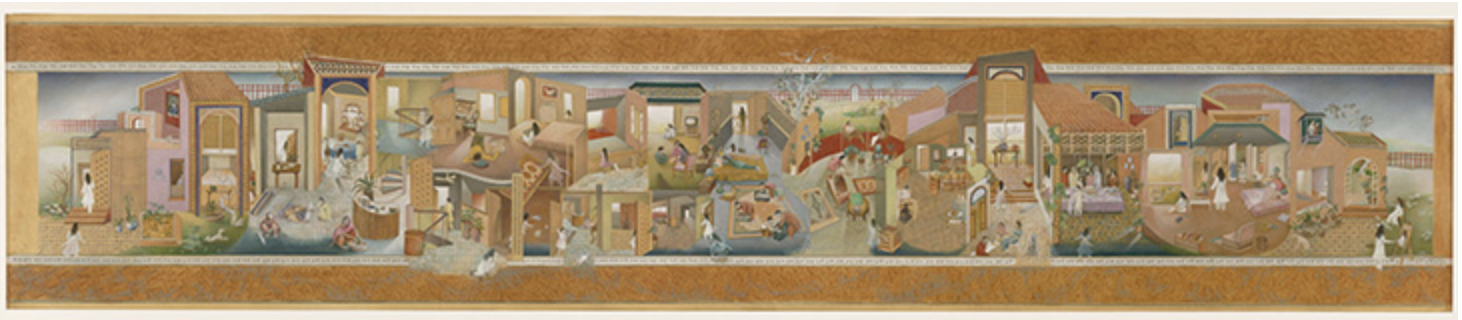
Shahzia Sikander, “The Scroll,” 1989–1990, vegetable color, dry pigment, watercolor, and tea on wasli paper
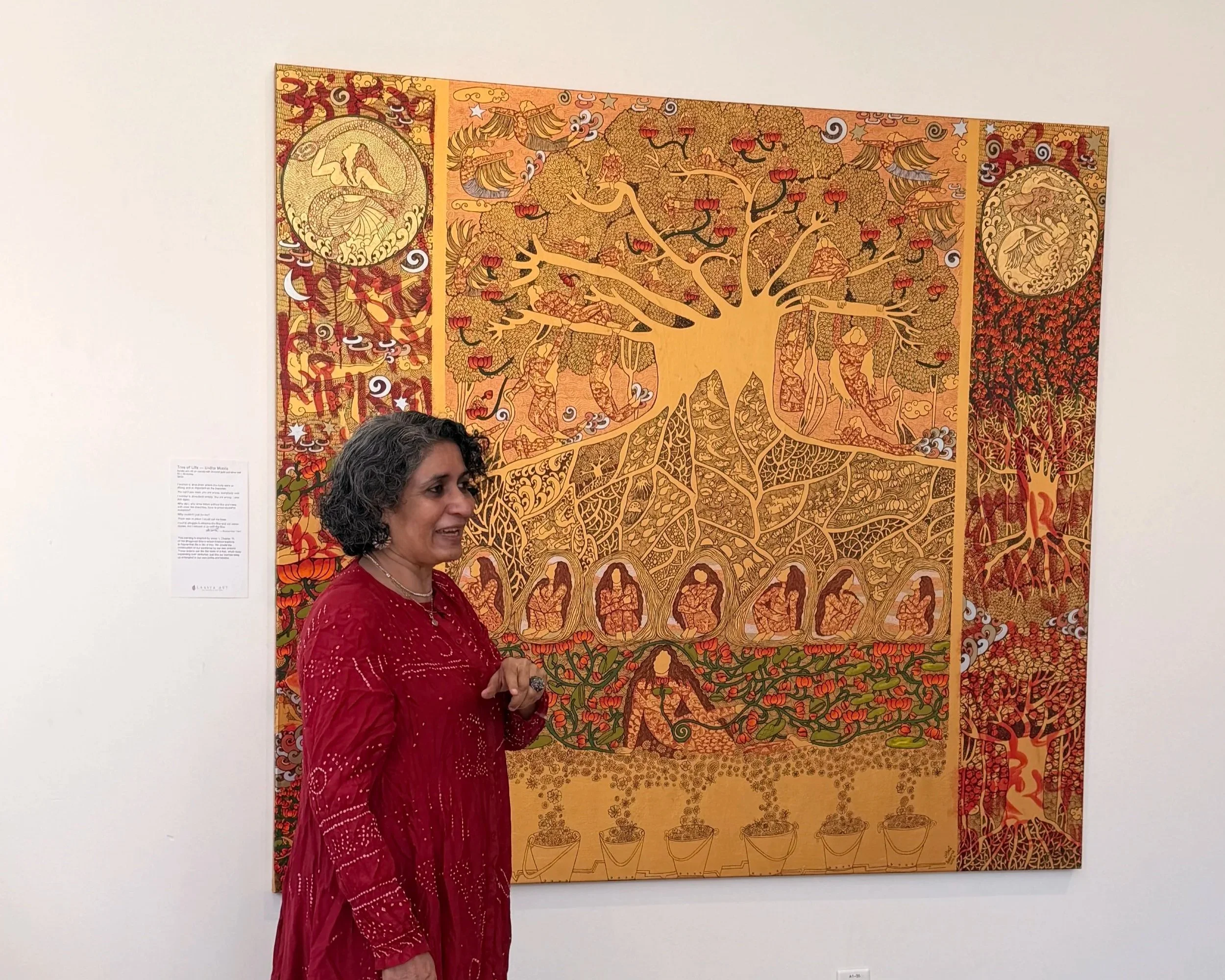
Seema Kohli, “Tree of Life”
Why Sikander Speaks to Me
Of the two artists, I found myself more drawn to Sikander.
There is something about the way she approaches the world that resonates with me.
She is a disrupter. A realist. She isn't afraid to share the world as she sees it—even when that means questioning accepted narratives.
Those are qualities I admire. Perhaps because, in my own way, they are qualities I recognize in myself.
What I love is that Sikander doesn't reject tradition. She engages with it. She learns its language and then makes it her own.
There is courage in that.
And it made me think about how all of us relate to the stories we inherit.
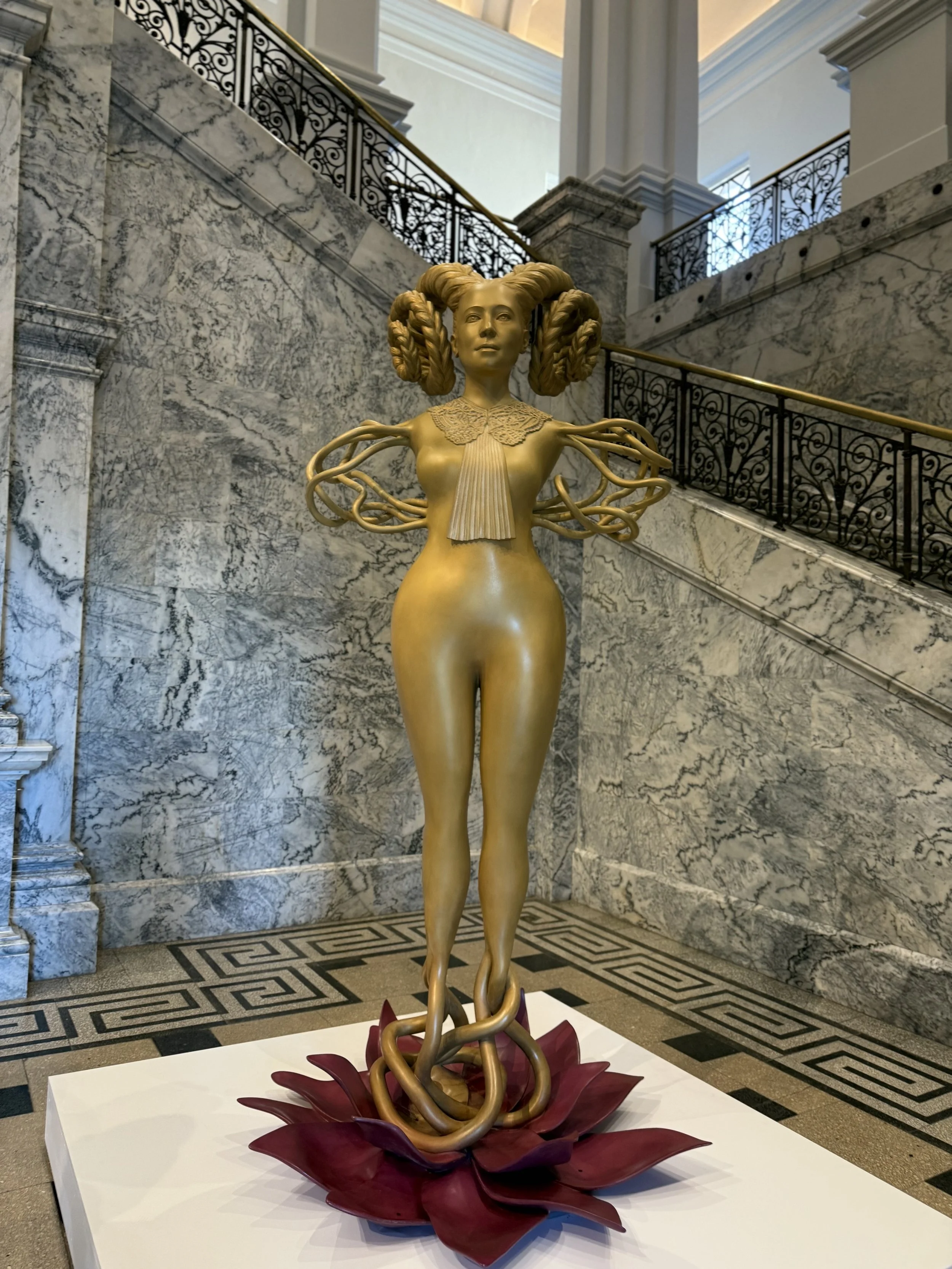
Shahzia Sikander, “NOW,” 2023, bronze, 8 feet high
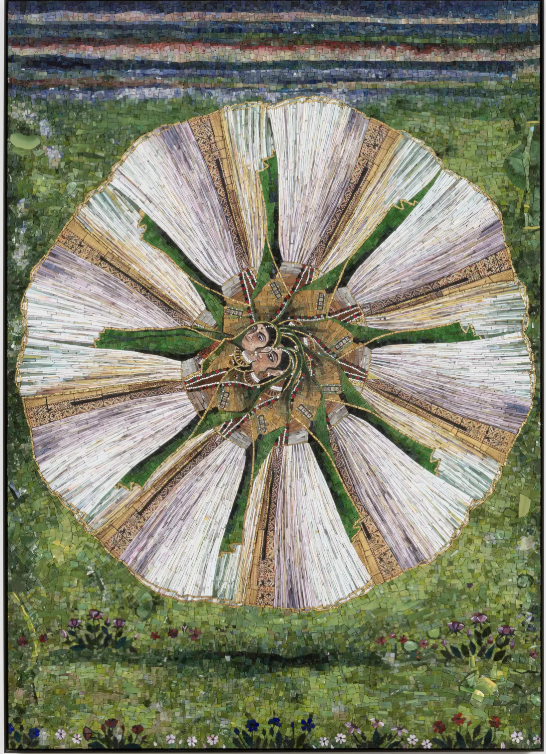
Shahzia Sikander, “Arose”, 2020. Glass mosaic with patinated brass frame
What Do We Carry Forward?
For me, that question is personal.
My family's history stretches from Lahore to Delhi, so ideas of heritage, belonging and cultural inheritance have always carried meaning for me.
There is so much beauty in what we inherit—art, rituals, food, language, family traditions and ways of seeing the world.
But inheritance doesn't require unquestioning acceptance.
We can treasure parts of our past while challenging others. We can celebrate where we come from without allowing it to define every part of who we become.
And perhaps that is what I found most fascinating about seeing these two artists in contrast.
Kohli seems to find possibility in celebrating and expanding tradition.
Sikander finds possibility in questioning and disrupting it.
Neither approach cancels out the other. In fact, seeing them together made both feel more interesting.
The Art of Questioning
The older I get, the more I appreciate art that doesn't simply give me something beautiful to look at.
I want it to make me curious.
I want it to make me look twice.
And sometimes, I want it to make me a little uncomfortable.
Sikander does that for me.
Her work reminds me that the stories we're given are not necessarily the stories we have to keep telling in exactly the same way.
We can honor where we came from and still question it.
We can preserve what feels meaningful, challenge what no longer does and add our own voice to the story.
Perhaps that's why I walked away thinking about Sikander long after I had left the gallery.
She doesn't just ask us to look at art differently.
She asks us to look at what we've inherited—and decide for ourselves what we want to carry forward.
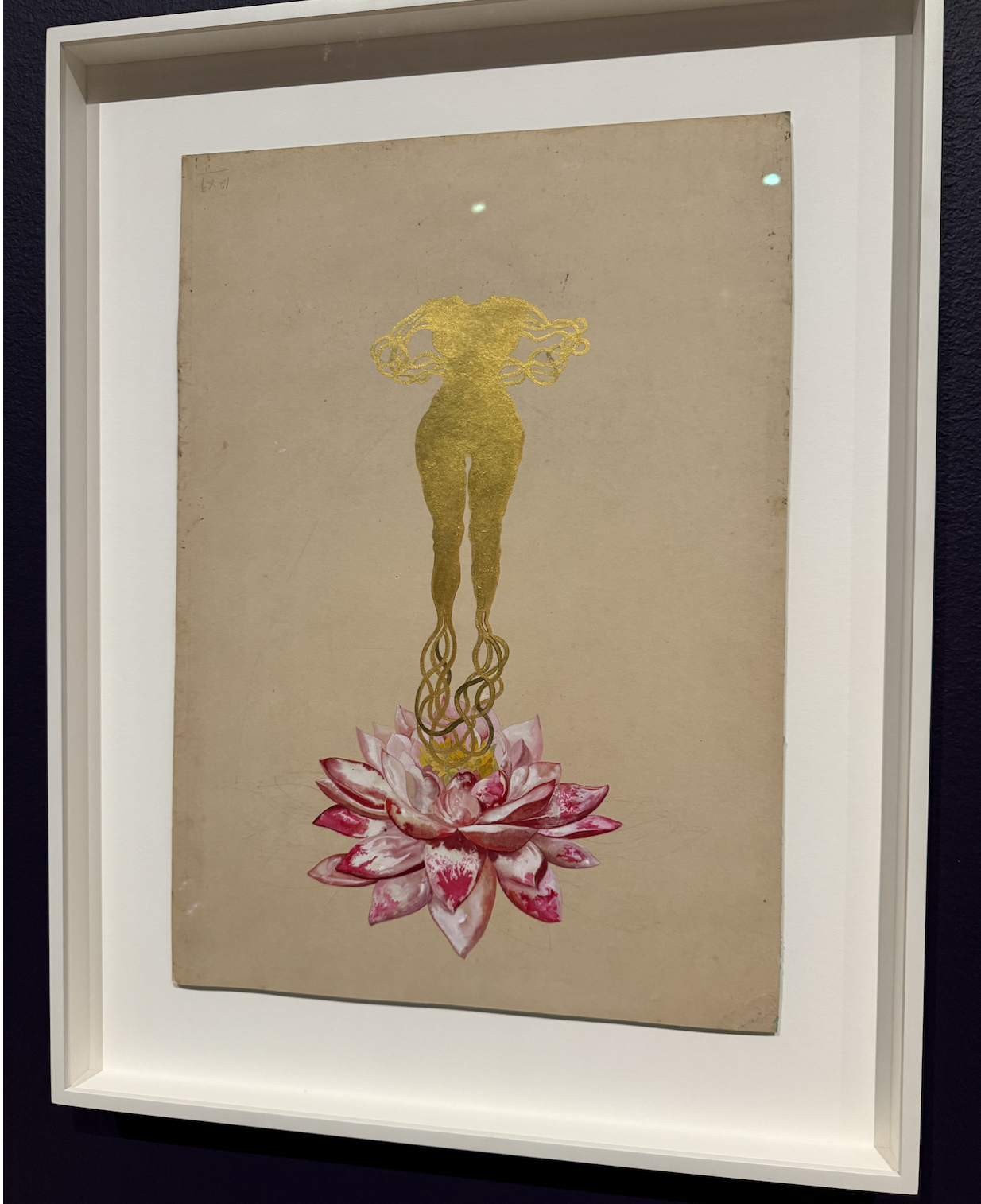
Shahzia Sikander
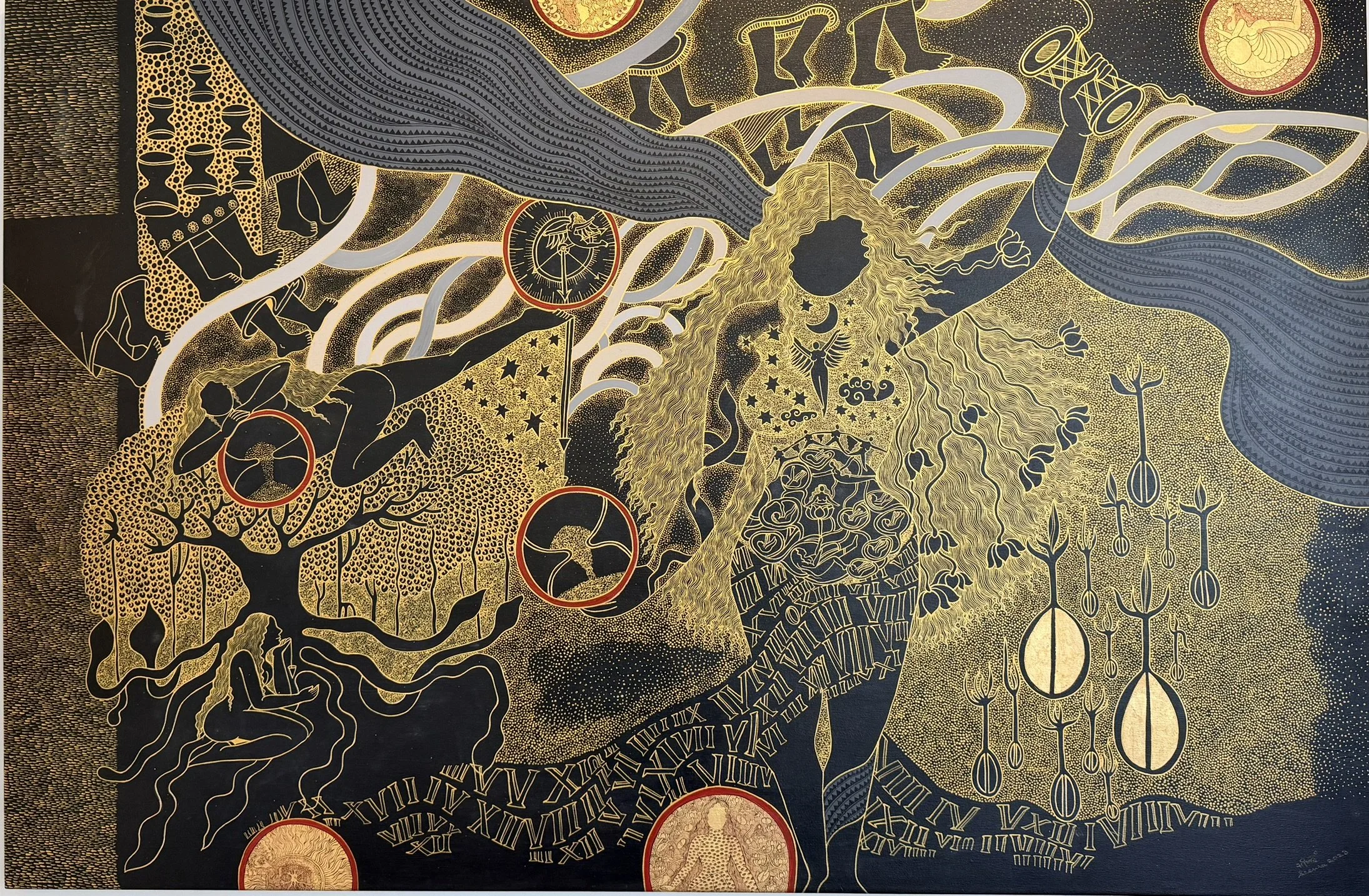
Seema Kohli
MBellished Tip
When looking at contemporary art, don't worry about understanding everything immediately. Start with your reaction. What draws you in? What makes you uncomfortable? What do you keep thinking about after you've walked away?
Sometimes that tells you more than reading the wall label ever could