
The Enduring Appeal of Kilim
Rich in color, pattern and history, kilim textiles bring character to both traditional and contemporary interiors.
I've always been drawn to textiles that bring a sense of history and character into a room, and kilims do exactly that.
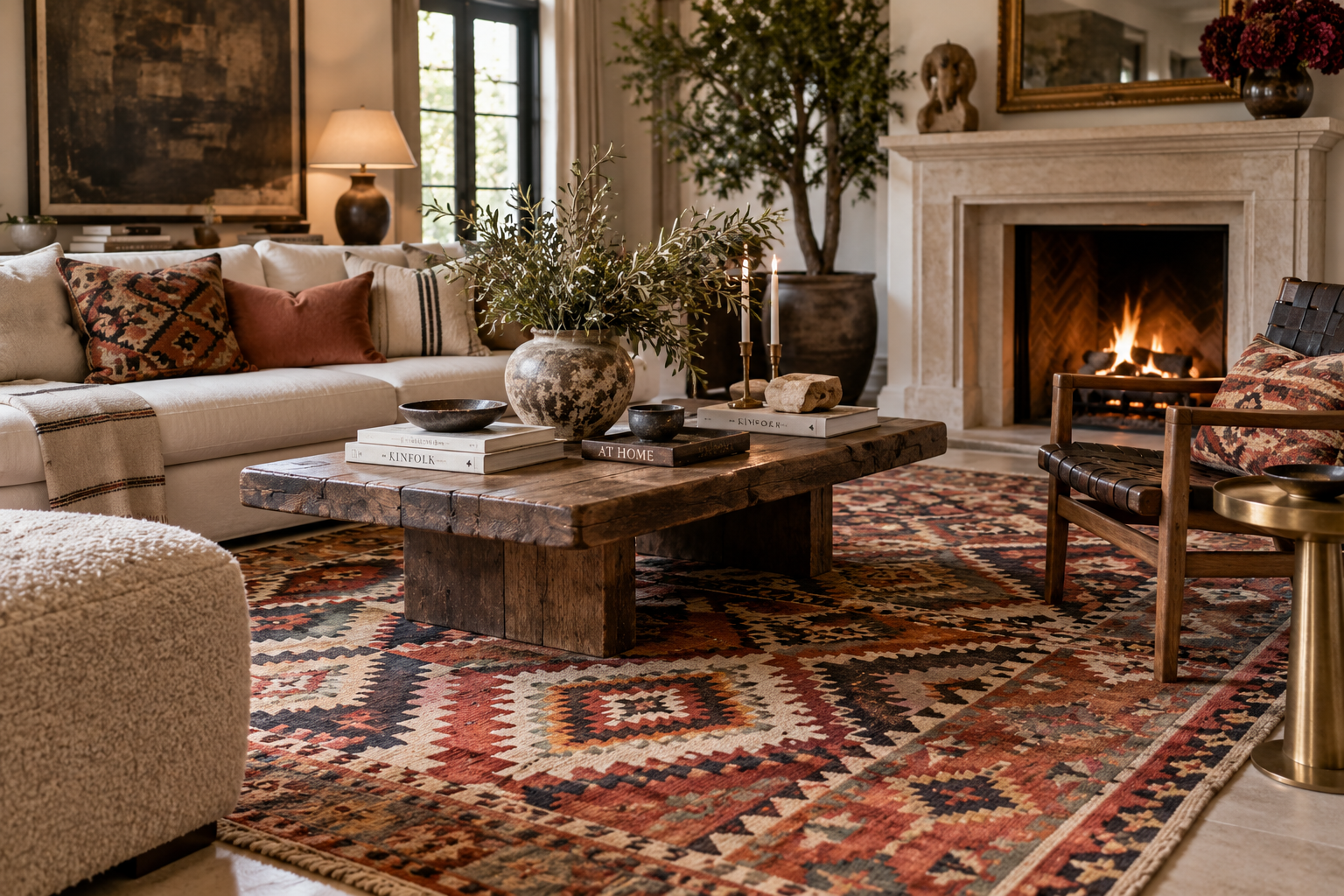
With their distinctive flat weave, geometric patterns and wonderful combinations of color, they can add warmth and texture without making a space feel overly decorated.
What I particularly love is their versatility. A kilim can feel completely at home in a traditional interior—and equally interesting against clean, contemporary furniture.
Beyond the Rug
While kilim rugs may be the most familiar, the textiles become especially interesting when used in unexpected ways.
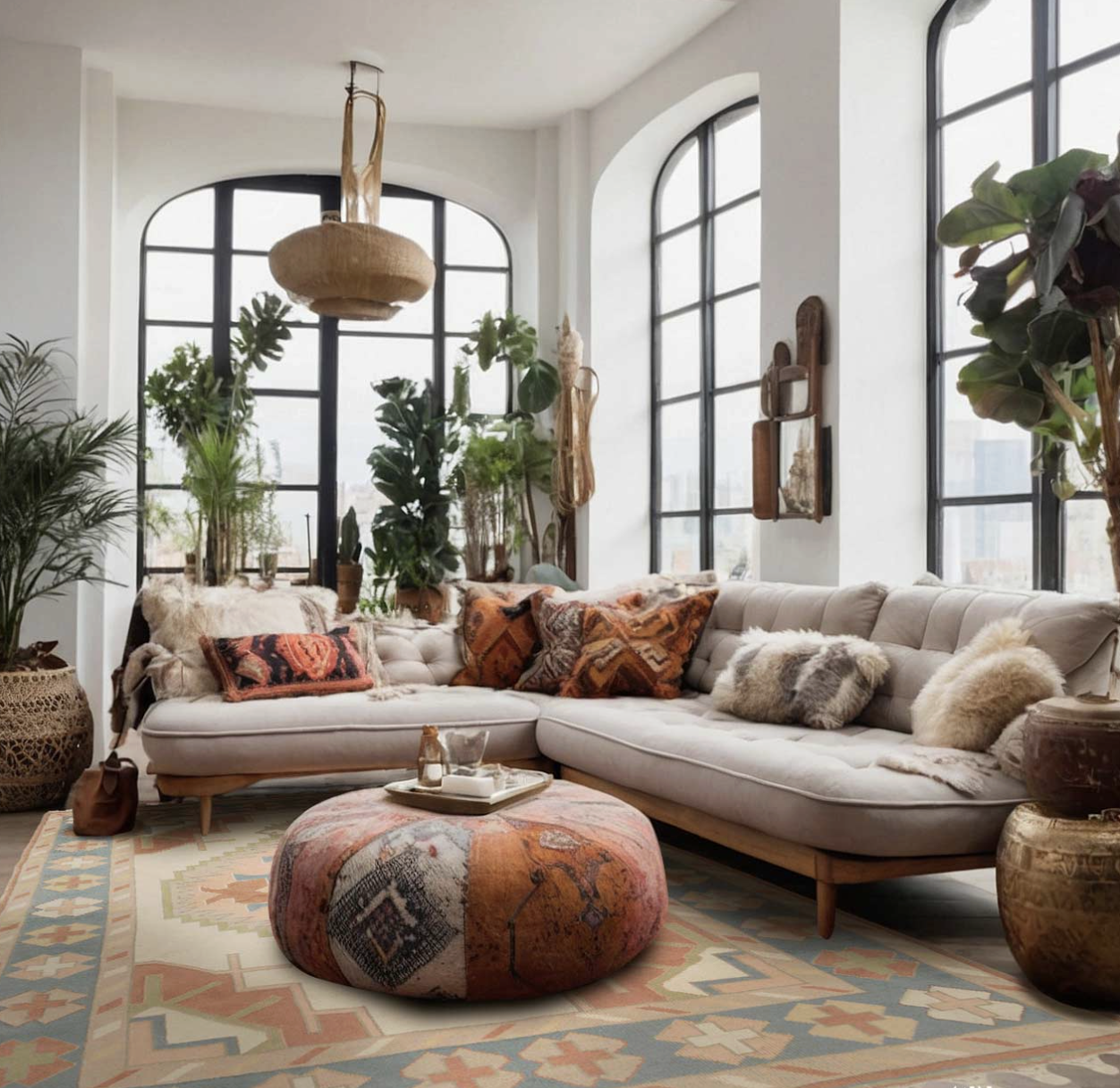
Pillows, ottomans, benches, and upholstered chairs can introduce just enough pattern to change the character of a room without overwhelming it.
I particularly love a collection of kilim pillows layered together. The variations in pattern and color keep the arrangement from feeling too coordinated.
The Beauty of Something Collected
For me, the appeal is strongest when a kilim doesn't look brand new or perfectly matched.
Slight variations, faded color, and signs of age give the textile personality. It feels collected rather than manufactured—and can bring that same quality to the room around it.
Mixing Old & New
Kilim works beautifully as a counterpoint to more polished pieces.
A patterned rug beneath a modern table. A kilim-covered ottoman in an otherwise restrained living room. A pair of pillows against a simple linen sofa.
It's often that contrast that makes a room interesting.
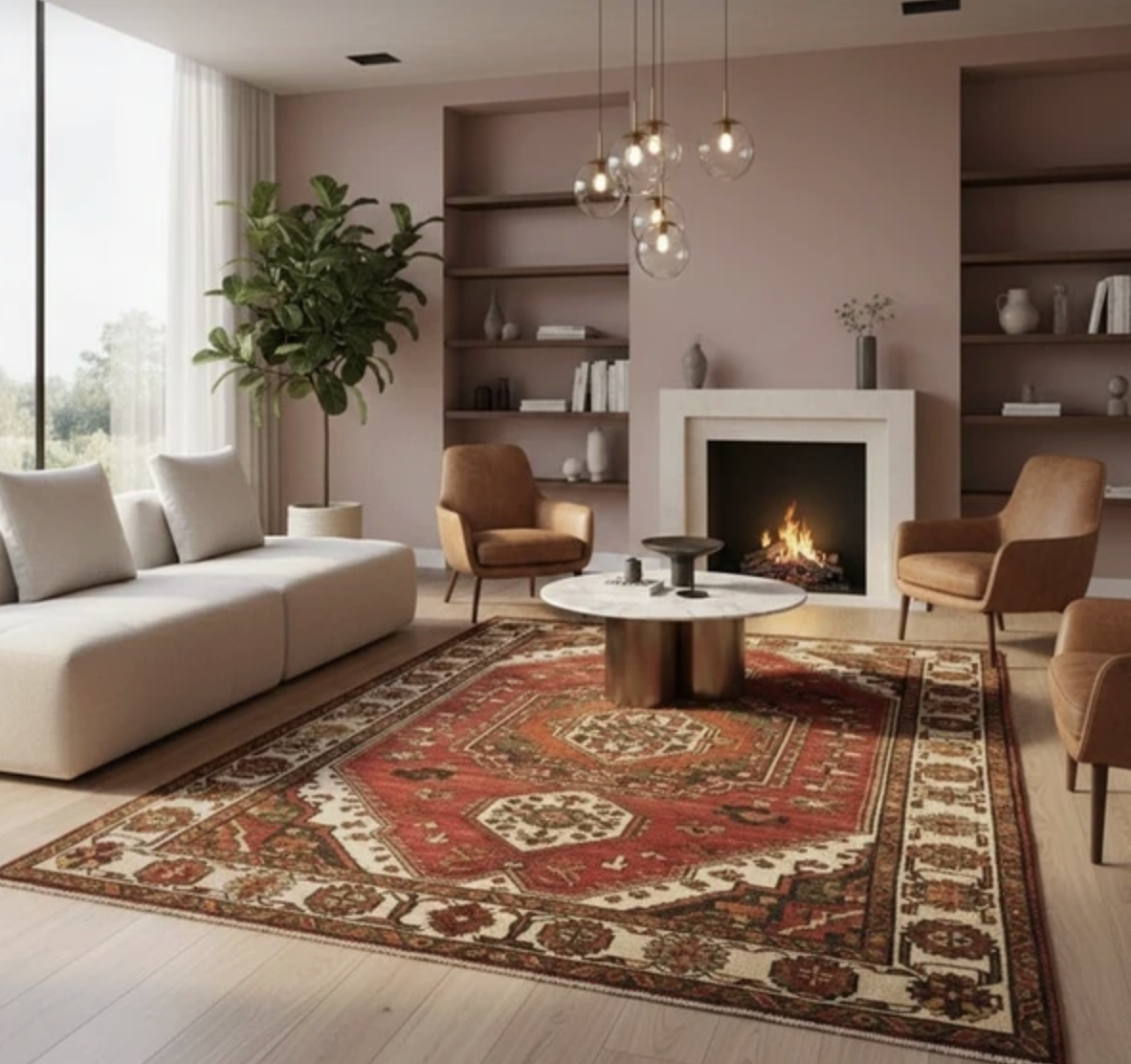
Kilim rug in a modern setting
MBellished Tips
Use kilim as an accent. A little pattern can have considerable impact.
Don't try to match everything. Variation is part of its appeal.
Mix it with quieter materials. Linen, leather, wood and natural textures allow the pattern to stand out.
Look for character. Vintage and one-of-a-kind pieces often have much more personality than reproductions.